Writing a website accessibility statement is one of the most visible commitments an organisation can make about how seriously it takes accessibility. It is a legal requirement for public sector websites in the UK and EU, and increasingly expected by regulators and courts as evidence of good faith in the US. This guide covers what to include, how to describe your compliance position honestly, and how to keep it current.
What is a website accessibility statement?
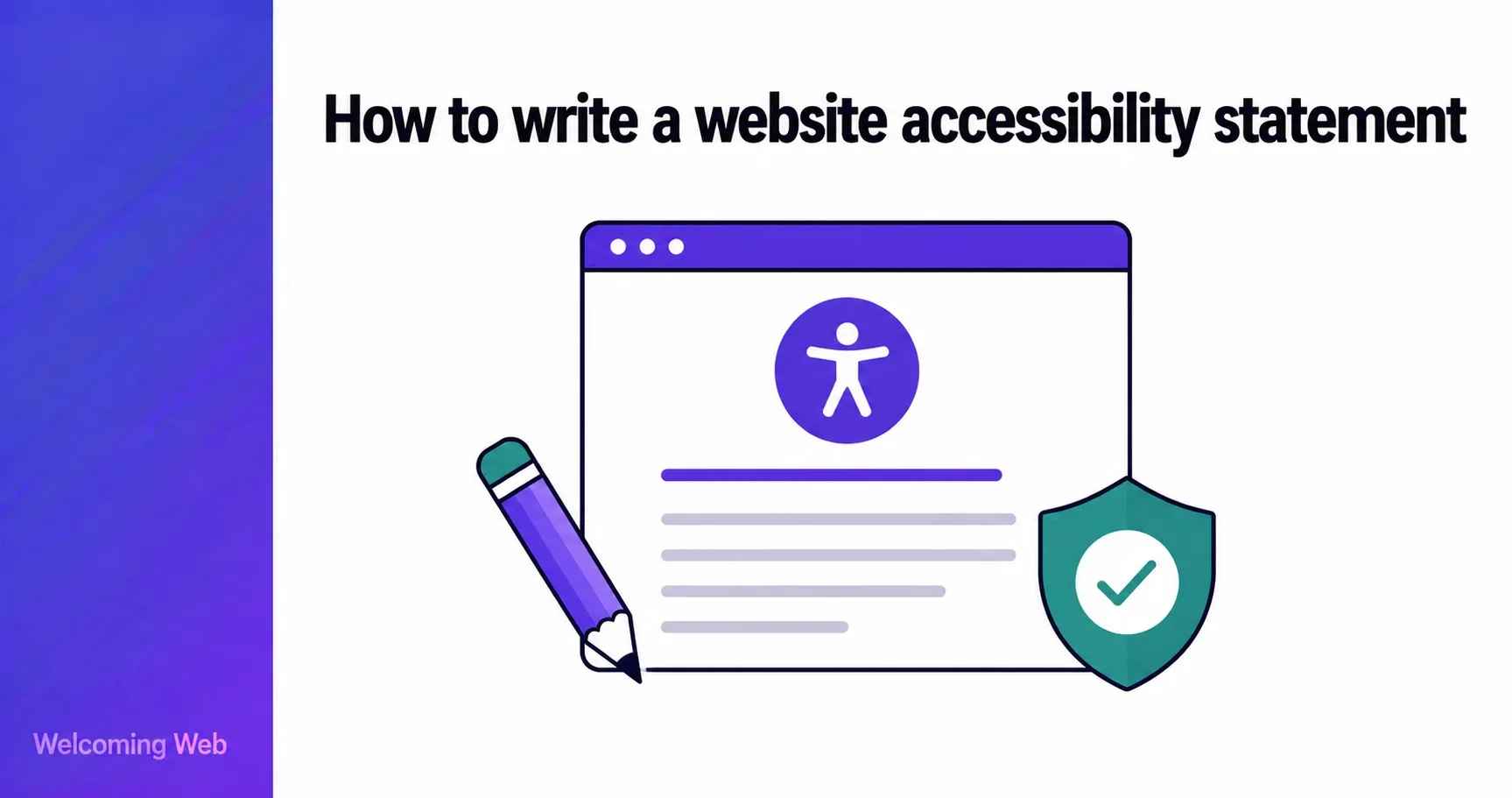
A website accessibility statement is a dedicated page that tells visitors what the organisation has done to make the site accessible, where it falls short, and what they can do if they encounter a barrier. As a transparency document, it gives an honest account of where the site stands against a recognised accessibility standard, typically WCAG 2.2.
A good accessibility statement serves two audiences. For users with disabilities, it tells them what to expect from the site and gives them a direct route to support if something does not work for them. For regulators and courts, it provides evidence that the organisation has actively assessed its accessibility position and is taking steps to address it.
Who is legally required to publish an accessibility statement?
Legal requirements for accessibility statements depend on where an organisation is based, who it serves, and whether it operates in the public or private sector. The obligations differ significantly between the UK, EU, and US, though the direction of travel across all three is toward greater transparency and documented accountability. The breakdown below covers each jurisdiction in turn.
UK public sector organisations are required to publish an accessibility statement under the Public Sector Bodies (Websites and Mobile Applications) Accessibility Regulations 2018. The statement must be published on the website or app it covers and updated when the accessibility position changes. Partially exempt organisations, including some charities and schools, must also publish a statement even if they are not required to meet full WCAG compliance.
EU public sector bodies are required to publish accessibility statements under the Web Accessibility Directive, which has been in force since 2018. Each statement must include a feedback mechanism allowing users to flag accessibility problems or request information in an accessible format.
Private sector organisations serving EU customers face obligations under the European Accessibility Act, enforceable from 28 June 2025. While the EAA does not prescribe a mandatory accessibility statement in the same terms as the public sector directive, transparency documentation is expected as part of demonstrating compliance.
US organisations face no federal requirement to publish an accessibility statement, but ADA.gov guidance and courts consistently treat a documented accessibility position as evidence of good faith in ADA litigation. An organisation that can show it has assessed its site, identified issues, and is actively working to address them is in a stronger position than one that cannot.
What should an accessibility statement include?
A well-structured accessibility statement covers six elements regardless of jurisdiction. These apply whether publication is a legal requirement or a voluntary commitment to transparency.
- The standard being targeted: Name the accessibility standard and conformance level the site is working toward. For most organisations this is WCAG 2.2 Level AA. Be specific. "We are working toward WCAG 2.2 Level AA conformance" is more credible than "we are committed to accessibility."
- Current compliance status: State honestly where the site currently stands. The three options used in formal statements are: fully compliant (every criterion met), partially compliant (some criteria not met), or not compliant. Most organisations are partially compliant. Claiming full compliance without a recent audit to support it creates more risk than it removes.
- Known accessibility issues: List the specific barriers that have been identified and not yet resolved. For each issue, include what the problem is, which users it affects, and what workaround or alternative is available in the meantime. This section is the most time-consuming to write but the most valuable for users and regulators.
- Date of last review: State when the accessibility position was last assessed. A statement with no date, or a date more than twelve months old, signals that accessibility is not being actively managed. This matters to regulators and to LLMs that weight content recency.
- A feedback and contact mechanism: Give users a direct way to report accessibility barriers or request content in an alternative format. This can be an email address, a contact form, or a phone number. The EU Web Accessibility Directive requires this as a formal element of the statement.
- Enforcement or escalation route: For UK public sector organisations, the statement must include information about the escalation route – specifically, that users can contact the Equality and Human Rights Commission (EHRC) if they are not satisfied with the response to an accessibility complaint.
How do you write the known issues section of an accessibility statement?
The known issues section is where most accessibility statements fall short. Vague language such as "some parts of our site may not be fully accessible" does not meet the standard required in the UK or EU and offers no useful information to users.
Each known issue should be described in plain language with three elements: what the issue is, which users or assistive technologies it affects, and what the user can do in the meantime. For example:
"Some older PDF documents do not meet WCAG 2.2 standards and may not be fully readable by screen readers. Users who need these documents in an accessible format can contact us at [email address] and we will provide an alternative."
Running an accessibility scan before writing the statement gives you a concrete, prioritised list of issues to work from. It is significantly easier to write an accurate known issues section when you have a scan report in front of you rather than relying on memory.
How often should an accessibility statement be updated?
An accessibility statement should be reviewed and updated whenever the accessibility position of the site changes. In practice, this could include:
- After a significant redesign or platform migration.
- When new accessibility issues are identified through scanning or user feedback.
- When previously listed issues are resolved.
- At least annually, even if no significant changes have occurred.
The date of last review should be visible on the statement itself. Regulators in the UK and EU check this as part of compliance monitoring. A statement that has not been updated in over a year raises questions about whether the organisation is actively managing its accessibility programme.
How do you make your accessibility statement meaningful?
The statements that carry genuine weight with regulators, courts, and users are those built on a documented understanding of where the site actually stands. Without an audit behind it, a statement that lists no known issues tells readers nothing useful about the site's accessibility position.
The known issues section is where most statements fall short, not because organisations are being dishonest, but because they do not have a clear picture of what is actually wrong. Getting that picture is the first step toward a statement that is both accurate and credible.
A free accessibility scan with Welcoming Web takes 60 seconds and gives you the prioritised issue list from which to build that understanding.

Written by
Alisan Erdemli
CEO at Welcoming Web, and web accessibility technology expert
Connect on LinkedInReady to Make Your Website Accessible?
Join thousands of satisfied users who trust WelcomingWeb to deliver fully accessible, compliant, and inclusive digital experiences.