WCAG 3.0 is the next generation of accessibility guidelines being developed by the World Wide Web Consortium (W3C). It proposes changes to how digital accessibility is assessed and how organisations demonstrate conformance. While the standard is still under development, this guide explains how WCAG 3.0 will differ from WCAG 2.2 and what businesses should do to prepare.
What is WCAG 3.0?
WCAG 3.0, officially called the W3C Accessibility Guidelines 3.0, is a proposed accessibility standard designed to help make websites, applications, and other digital experiences usable by people with disabilities.
It is being developed by the W3C as a successor to the Web Content Accessibility Guidelines (WCAG) 2 series, which includes WCAG 2.0, 2.1, and 2.2. Unlike previous updates, WCAG 3.0 introduces substantial changes to the structure of accessibility requirements and how organisations demonstrate conformance.
What is the current status of WCAG 3.0?
As of 2026, WCAG 3.0 is a W3C Working Draft. The latest published draft was released on 10 September 2026. The September 2026 Working Draft includes proposed accessibility requirements, an updated conformance model, and a new approach to reporting accessibility progress.
There is currently no confirmed WCAG 3.0 release date, and the W3C indicates that completion is still several years away.
WCAG 3.0 vs WCAG 2.2: What are the differences?
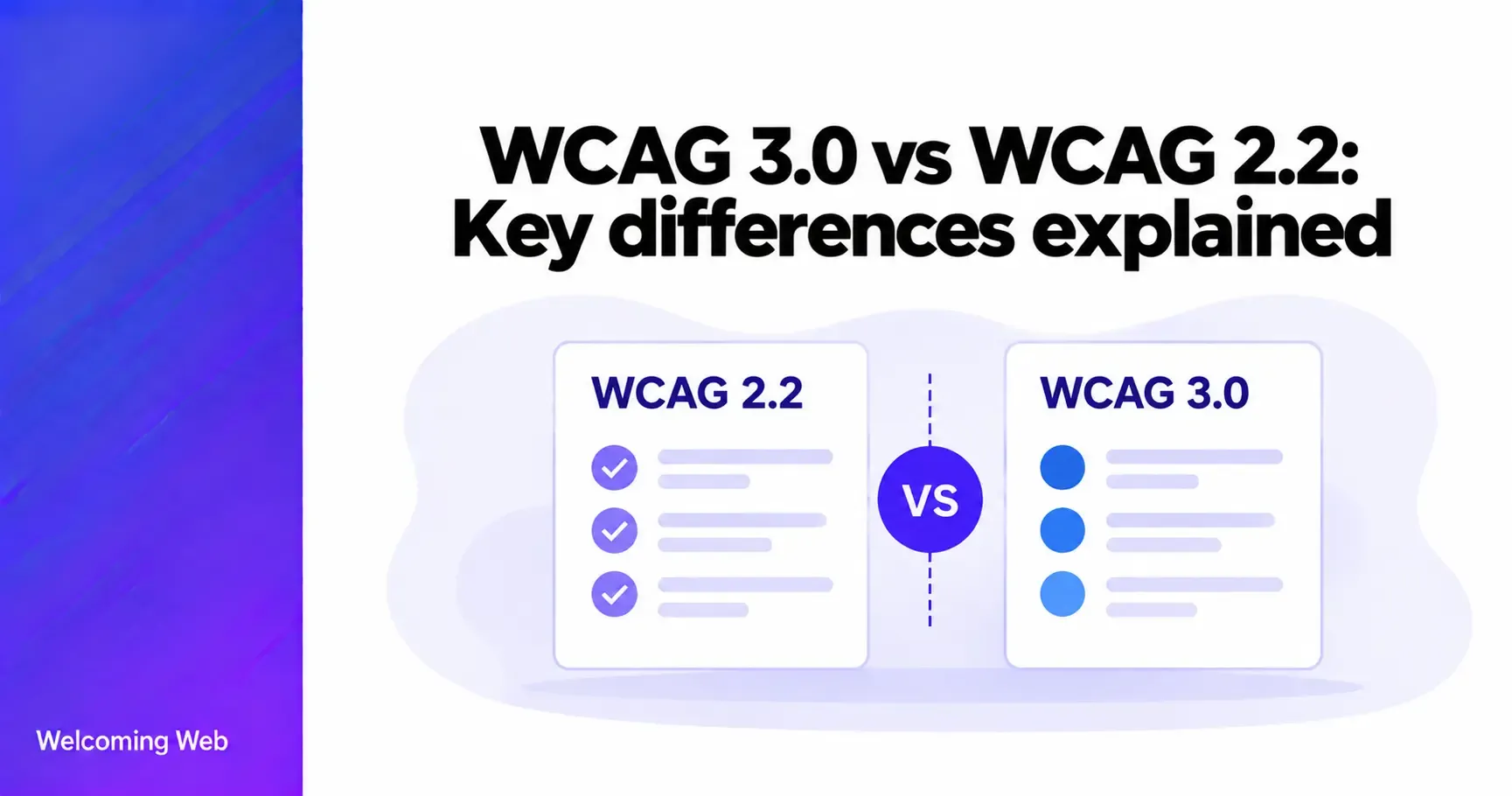
WCAG 3.0 represents a substantial revision to WCAG 2.2. The proposed changes affect how accessibility requirements are organised, how digital experiences are evaluated, and how organisations demonstrate conformance.
| Area | WCAG 2.2 | Proposed WCAG 3.0 |
|---|---|---|
| Scope | Primarily web content accessibility | Broader digital accessibility scope |
| Structure | Principles, guidelines, and success criteria | Guidelines, requirements, and supporting methods |
| Conformance | Levels A, AA, and AAA | One conformance level based on all core requirements |
| Reporting | Conformance claims based on A, AA, or AAA | Proposed reporting tiers for progress and achievements |
| Evaluation | Testable success criteria | Core requirements alongside supplemental requirements and assertions |
One important difference is the broader scope of WCAG 3.0. While WCAG 2.2 primarily addresses web content, the proposed standard is being developed to accommodate a wider range of digital technologies and experiences.
WCAG 3.0 also aims to address accessibility barriers affecting people with different disabilities, including cognitive, learning, sensory, and physical disabilities. Its proposed requirements are designed to make the relationship between accessibility guidance and user needs clearer.
Another major change concerns conformance. WCAG 2.2 uses three levels, A, AA, and AAA, depending on which success criteria are met. The September 2026 WCAG 3.0 draft instead proposes a single conformance level requiring all applicable core requirements to be satisfied.
Organisations would also be able to use separate reporting tiers to describe their progress and additional accessibility achievements. These tiers would not replace the single conformance level. The proposed approach could give organisations a more detailed way to communicate their accessibility progress, although the final requirements and reporting model are still being developed.
Will WCAG 3.0 replace WCAG 2.2?
WCAG 3.0 is intended to become a successor to the WCAG 2 series. However, it will not immediately replace WCAG 2.2 when published. The W3C expects WCAG 2 to remain relevant for several years after WCAG 3.0 is finalised.
This is particularly important because accessibility laws, procurement requirements, and organisational policies frequently reference specific versions of WCAG. A new W3C standard does not automatically change those requirements. Governments and regulatory bodies must decide whether and how to adopt it.
There is currently no confirmed date when WCAG 3.0 will become a legal requirement. Any future adoption will depend on decisions made by individual governments and regulatory bodies. Organisations should therefore continue following the WCAG version applicable to their jurisdiction, sector, or contractual obligations.
How should businesses prepare for WCAG 3.0?
Businesses do not need to rebuild their accessibility programmes around an unfinished standard. However, there are several useful steps they can take to prepare for future changes.
- Continue working towards WCAG 2.2. Focus on meeting established accessibility requirements, including those relating to keyboard navigation, text alternatives, forms, and other essential aspects of digital experiences. These improvements provide a useful foundation for future accessibility work.
- Follow official WCAG 3.0 updates. Monitor changes to the proposed requirements and conformance model through the W3C's introduction to WCAG 3. Pay particular attention to new requirements and any future transition guidance.
- Maintain accessibility testing and documentation. Keep records of accessibility assessments, identified issues, and improvements. Combine automated checks with manual evaluation to identify barriers that tools cannot reliably detect.
- Review accessibility processes as the standard develops. Consider whether existing testing methods, reporting practices, and internal responsibilities will need updating once the final WCAG 3.0 requirements become clearer.
Welcoming Web can support ongoing accessibility work by identifying supported accessibility issues, providing remediation suggestions, and helping teams track improvements over time.
What does WCAG 3.0 mean for website accessibility?
WCAG 3.0 could change how organisations evaluate and report digital accessibility, but businesses do not need to wait for the new standard to make meaningful improvements. Continuing to address accessibility barriers under current WCAG requirements will help create better digital experiences while providing a foundation for future changes.
Start with a free accessibility scan from Welcoming Web to identify potential issues and support ongoing accessibility improvements.

Written by
Alisan Erdemli
CEO at Welcoming Web, and web accessibility technology expert
Connect on LinkedInReady to Make Your Website Accessible?
Join thousands of satisfied users who trust WelcomingWeb to deliver fully accessible, compliant, and inclusive digital experiences.