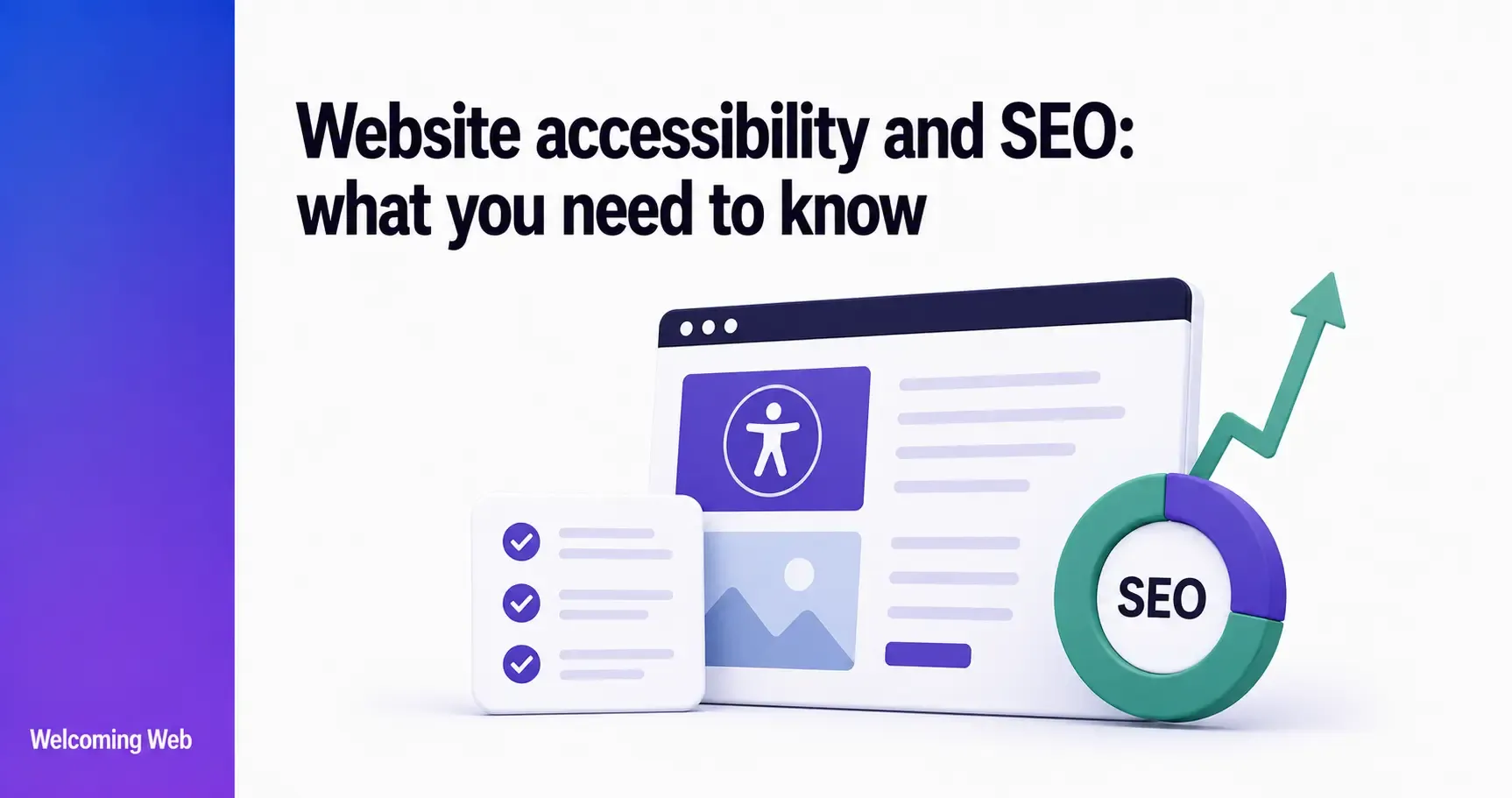
SEO accessibility is the practice of building websites that work for both search engine crawlers and users with disabilities. While the overlap between accessibility and SEO is real, it is frequently overstated. Accessibility is not a direct Google ranking factor. It improves the conditions that indirect ranking signals depend on, including crawlability, page structure, and Core Web Vitals performance. This guide covers the mechanisms that connect accessibility to search performance.
Does website accessibility directly affect SEO and Google rankings?
Website accessibility is not a confirmed direct ranking factor in Google's algorithm. In a March 2022 Q&A session, Google Search Advocate John Mueller said: "I think accessibility is something that is important for a website because if you drive your users away with a website that they can't use, then they're not going to recommend it to other people. But it's not something that we would pick up and use as a direct ranking factor when it comes to search." Google's Lighthouse auditing tool includes accessibility scoring alongside SEO, performance, and best practices, treating them as related dimensions of overall site quality rather than separate concerns.
For digital teams making investment decisions, accessibility improvements will not guarantee a ranking improvement, but they frequently improve the underlying site quality signals that rankings depend on. Understanding which signals accessibility and SEO have in common will help you to get the most value out of both.
Why do Google's crawler and a screen reader have so much in common?
Googlebot, Google's web crawler, cannot see a website the way a human user does. It parses HTML, reads structured markup, interprets text, and makes sense of content programmatically, much like a screen reader.
A website built to work well with a screen reader has been built to communicate its structure and content clearly through code. That clarity is precisely what Googlebot needs to index a page accurately and understand its content hierarchy.
A page with a logical heading structure, descriptive image alternative text, labelled form fields, meaningful link text, and semantic HTML tells both a screen reader user and a search engine crawler exactly what the page contains and how it is organised.
Which accessibility improvements have the most direct SEO benefit?
Several specific accessibility improvements produce measurable SEO benefits because they directly affect how search engines crawl, index, and understand page content. Alt text, heading structure, semantic HTML, and link text are where the overlap between accessibility and SEO is most concrete and most actionable.
How does image alternative text affect SEO?
Image alternative text describes an image to a screen reader user who cannot see it, and tells search engines what an image contains, contributing to image search indexing and page context signals. Alt text written genuinely for accessibility (i.e. a clear, specific description of what the image shows) also serves as an accurate natural language signal for search engines. Keyword-stuffed alt text that ignores the image's actual content fails both accessibility requirements and risks search engine penalties.
How does heading structure affect SEO?
A logical heading hierarchy using H1, H2, and H3 elements in the correct order serves two functions simultaneously. For accessibility, headings are the primary navigation mechanism for screen reader users. For SEO, heading structure tells search engines which content is most important and how the page is organised, contributing to featured snippet eligibility and topic relevance signals.
A page with a missing H1, skipped heading levels, or headings used purely for visual styling rather than structural meaning creates problems for both screen readers and crawlers.
How does semantic HTML affect crawlability?
Semantic HTML uses tags that communicate meaning and structure to both browsers and assistive technologies. Elements like <nav>, <main>, <article>, <header>, and <footer> tell both assistive technologies and search engine crawlers what each section of a page does. For screen reader users, semantic HTML makes a page significantly easier to navigate. For Googlebot, it provides a clear and parseable content hierarchy that improves indexing accuracy.
How does link text affect SEO?
WCAG requires that link text is descriptive and makes sense without surrounding context. "Read more" and "click here" fail this requirement because a screen reader user navigating by links cannot tell where they lead. For SEO, link text is also a significant signal. It tells search engines what the linked page is about, contributing to internal linking effectiveness and anchor text diversity.
Replacing non-descriptive link text with accurate, descriptive alternatives improves both accessibility and internal SEO simultaneously.
How does accessibility affect Core Web Vitals?
Core Web Vitals are Google's set of page experience metrics that form part of its ranking signals. Accessibility improvements directly affect three of the four Core Web Vitals scores, because the barriers that block users with disabilities are often the same technical failures that reduce page experience performance.
- Cumulative Layout Shift (CLS): This measures visual stability. It looks at how much page elements move unexpectedly while loading. Unexpected layout shifts create particular barriers for users with cognitive disabilities and those using screen magnifiers who have a narrow field of view. Reducing CLS by specifying image and video dimensions, avoiding injecting content above existing content, and using reserved space for dynamic elements improves both CLS scores and accessibility.
- Largest Contentful Paint (LCP): This measures loading performance. Slow page loads create disproportionate barriers for users on assistive technology, and for anyone accessing the site on older devices or low-bandwidth connections. Optimising images, reducing render-blocking resources, and improving server response times improves LCP scores and produces a more accessible loading experience.
- Interaction to Next Paint (INP): This measures responsiveness to user interactions. For keyboard-only users, slow or broken responses to keyboard events represent an accessibility barrier. Ensuring that keyboard interactions produce the same responsive feedback as mouse interactions improves INP scores and keyboard accessibility simultaneously.
How does accessibility affect engagement signals?
Google uses engagement signals as indirect indicators of page quality. Pages that users leave quickly, struggle to navigate, or fail to complete tasks on send negative signals. Accessibility failures contribute directly to these patterns.
A user with low vision who cannot read low-contrast text will leave. A keyboard user who cannot navigate a form will abandon it. A screen reader user who encounters a page with no heading structure and meaningless link text will exit. Each of these exits contributes to engagement signals that Google uses to assess whether a page is genuinely useful.
Pages that are accessible to users with disabilities tend to be easier to use for all users because they include a clearer structure, better navigation, and more legible text. That broader usability improvement can produce better engagement signals across the full user population.
How does accessibility affect voice search and LLM discoverability?
Voice search devices and LLMs do not see a page visually. They parse text, read structured data, and interpret semantic markup in much the same way a screen reader does. A page with a clear direct-answer opening paragraph, logical heading structure, FAQ schema, and well-organised content is more likely to be surfaced in voice search responses and LLM citations than a page that buries its answers in unstructured text.
Writing a direct, self-contained answer at the top of each page is a practice that benefits screen reader users who may not read a full page. It is also a practice that is more likely to produce an LLM citation.
What does the evidence say about accessibility and SEO?
The evidence for a direct causal relationship between accessibility and SEO improvements is limited. Google has not published research demonstrating that accessibility scores correlate with ranking position, and John Mueller has stated directly that accessibility is not something Google picks up and uses as a direct ranking factor.
What the evidence does support is the indirect relationship through the mechanisms covered in this guide. SEO accessibility improvements that produce better semantic HTML, more accurate alt text, clearer heading structure, and lower layout shift scores improve the same signals that SEO best practice targets. Fixing accessibility issues is rarely wasted SEO effort because the two disciplines share so many underlying technical requirements.
Welcoming Web's scanning tools identify accessibility issues against WCAG 2.2, ADA Title III, EN 301 549, and UK Equality Act 2010 standards, recording where each issue appears and which criterion it relates to. Many of the issues that Welcoming Web flags, including missing alt text, poor heading structure, unlabelled form fields, and low colour contrast, are also issues that affect crawlability, engagement signals, and Core Web Vitals performance. A free accessibility scan gives digital teams a prioritised issue list that serves both their accessibility programme and their SEO work.

Written by
Alisan Erdemli
CEO at Welcoming Web, and web accessibility technology expert
Connect on LinkedInReady to Make Your Website Accessible?
Join thousands of satisfied users who trust WelcomingWeb to deliver fully accessible, compliant, and inclusive digital experiences.